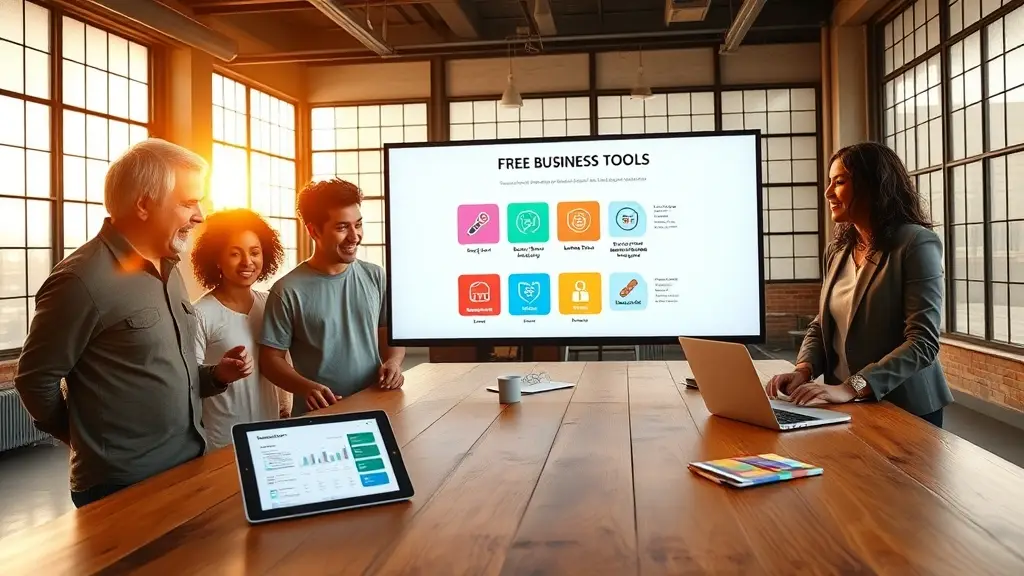
Your online presence is often the first impression potential clients have of your business. The good news? You don’t need a big budget to make it impactful. These six powerful, completely free tools can elevate your brand, boost visibility, and streamline your digital workflow—starting today. From eye-catching designs to local search dominance, these tools help small businesses compete with larger companies. Let’s dive in!
Why These Tools Matter
In 2025, 94% of consumers research online before engaging with a business (Stanford Web Credibility Research). A strong digital presence builds trust, drives traffic, and converts leads. These free tools are beginner-friendly, practical, and scalable, perfect for small businesses looking to maximize impact without breaking the bank.
1. Canva – Design Like a Pro
Canva is a user-friendly graphic design platform with drag-and-drop functionality, offering thousands of free templates.
Use it for:
- Social media graphics (e.g., Instagram posts, Facebook covers)
- Website banners, logos, or infographics
- Presentations, business cards, or marketing materials
Why it matters:
- High-quality visuals boost brand credibility—70% of users trust businesses with professional designs (PMC, 2016)
- No design skills? No problem. Canva’s intuitive interface makes anyone a designer
- Free plan includes access to templates, stock photos, and basic editing tools
Pro Tip: Use Canva’s brand kit to save your colors, fonts, and logos for consistent designs across platforms.
2. Google Business Profile to Be Seen Locally
What it is: A free tool to manage your business’s presence on Google Search and Maps.
Use it for:
- Adding business info (name, address, phone, website)
- Posting updates, events, or offers
- Collecting and responding to customer reviews
- Uploading photos to showcase your products or storefront
Why it matters:
- 65% of local searches lead to a purchase within 24 hours (Google, 2024). An optimized profile ensures you’re visible when customers search “near me.”
- Builds trust through reviews and verified information
- Free analytics show how customers find you (e.g., search vs. maps)
Pro Tip: Regularly update your profile with fresh photos and respond to reviews to boost engagement and rankings.
3. Ubersuggest to Improve Your SEO
What it is: A free SEO tool by Neil Patel offering keyword research, site audits, and competitor analysis.
Use it for:
- Discovering high-traffic, low-competition keywords (e.g., “best coffee shop in [city]”)
- Analyzing competitors’ top-performing pages
- Auditing your website for SEO issues like broken links or slow load times
Why it matters:
- SEO drives 53% of website traffic (BrightEdge, 2023). Ubersuggest helps you rank higher on Google.
- Identify content gaps to create blog posts or pages that attract your target audience
- Free features include keyword ideas, traffic estimates, and basic site audits
Pro Tip: Focus on long-tail keywords (e.g., “affordable web design for small businesses”) to target specific, high-intent searches.
4. Linktree to Centralize Your Links
What it is: A free tool to create a single, customizable landing page with multiple links, perfect for social media bios.
Use it for:
- Directing users to your website, services, blog, or shop
- Promoting events, bookings, or lead magnets (e.g., free eBooks)
- Linking to multiple platforms (e.g., YouTube, Etsy, email signup)
Why it matters:
- Simplifies navigation, especially on platforms like Instagram or TikTok, where only one bio link is allowed
- Increases click-through rates by guiding users to high-value destinations
- Free analytics track link performance to optimize your strategy
Pro Tip: Customize your Linktree with brand colors and prioritize your most important links (e.g., “Book a Consultation”) at the top.
5. AnswerThePublic to Know What People Are Asking
What it is: A free tool that visualizes search queries and questions people type into Google and Bing.
Use it for:
- Generating content ideas for blogs, FAQs, or social posts
- Crafting product descriptions that address customer pain points
- Optimizing for Answer Engine Optimization (AEO) to appear in featured snippets or voice search results
Why it matters:
- Aligns your content with real customer questions, driving relevance and traffic
- Helps create targeted content that builds trust and authority (e.g., “How to choose a reliable plumber”)
- Free version offers daily search limits with robust insights
Pro Tip: Use question-based keywords in blog post titles and headers to boost AEO performance.
6. YouTube to Leverage Video Marketing
What it is: A free platform to upload, share, and promote video content, reaching billions of users worldwide.
Use it for:
- Creating tutorials, product demos, or how-to videos
- Sharing behind-the-scenes content to humanize your brand
- Building thought leadership with industry insights or customer stories
Why it matters:
- 82% of internet traffic is video-based (Cisco, 2023), and YouTube is the second-largest search engine
- Videos increase engagement, with viewers spending 2x longer on sites with video content (HubSpot, 2024)
- Free tools like YouTube Studio offer analytics to track views, watch time, and audience demographics
Pro Tip: Optimize video titles, descriptions, and tags with keywords (e.g., “small business marketing tips”) to boost discoverability.
How to Maximize These Tools
- Start Small: Pick 2-3 tools that align with your goals (e.g., Canva for visuals, Google Business Profile for local reach)
- Stay Consistent: Use these tools regularly to maintain a cohesive brand presence
- Track Results: Monitor analytics (e.g., Google Business Insights, YouTube Studio) to refine your strategy
- Integrate with Your Website: Drive traffic from these tools to your website for conversions
- Experiment and Learn: Test new features (e.g., YouTube Shorts, Canva animations) to stay ahead of trends
- Book a consultation with us today.
Real-World Impact
A small bakery used these tools to transform its online presence:
- Canva: Created eye-catching Instagram posts, doubling follower engagement
- Google Business Profile: Optimized their listing, leading to a 40% increase in local walk-ins
- Ubersuggest: Targeted keywords like “best cupcakes near me,” boosting search traffic by 25%
- Linktree: Linked to their menu and order form, increasing online sales by 15%
- AnswerThePublic: Wrote a blog post on “How to Choose a Wedding Cake,” earning a Google featured snippet
- YouTube: Posted a cake decorating tutorial, gaining 1,000 views and driving new inquiries
Common Mistakes to Avoid
- Inconsistent Branding: Ensure visuals, tone, and messaging align across tools
- Ignoring Analytics: Use built-in insights to track what works and what doesn’t
- Overloading Content: Keep designs, videos, and profiles clean and focused
- Neglecting Updates: Refresh your Google Business Profile, Linktree, or YouTube channel regularly
Frequently Asked Questions
Do I really need a budget to build a strong online presence? No. Tools like Canva, Google Business Profile, Ubersuggest, Linktree, AnswerThePublic, and YouTube are all free to use and let small businesses compete with larger companies without a big marketing budget. Starting with just 2-3 tools that align with your goals is enough to make a real impact.
Which free tool should I start with first? It depends on your goal. For visuals, start with Canva. For local visibility, start with Google Business Profile, since 65% of local searches lead to a purchase within 24 hours. For SEO and content ideas, Ubersuggest and AnswerThePublic work well together.
Why does Google Business Profile matter so much for small businesses? An optimized Google Business Profile ensures you show up when customers search “near me,” and it builds trust through reviews and verified business information. It also gives you free analytics showing how customers actually find you, whether through search or maps.
What is Answer Engine Optimization (AEO), and why does it matter? AEO means structuring your content so it can appear in featured snippets or voice search results, not just standard search rankings. Tools like AnswerThePublic help by showing the real questions people are typing into Google and Bing, so you can write content that directly answers them.
Do these free tools actually work, or are they too limited to matter? They work. A small bakery used this exact approach: Canva doubled their Instagram engagement, an optimized Google Business Profile drove a 40% increase in local walk-ins, and a blog post built around AnswerThePublic research earned a Google featured snippet. Free tools are limited in advanced features, not in real-world impact.
What’s the most common mistake businesses make with these tools? Inconsistency. Using a tool once and abandoning it, letting branding drift across platforms, or ignoring built-in analytics all undercut the results. Refreshing your Google Business Profile, Linktree, and YouTube channel regularly matters more than which tools you pick.
How do these tools work together instead of separately? Each tool feeds the next: Canva creates the visuals you post, Google Business Profile and YouTube build visibility, AnswerThePublic and Ubersuggest guide what content to create, and Linktree routes all of that traffic back to your website where it can convert into an actual inquiry or sale.
Why Act Now?
In a competitive digital landscape, a strong online presence sets you apart. These free tools level the playing field, letting businesses like yours create professional, high-impact content without a hefty budget. Start using them today to build trust, attract leads, and grow your brand.
Ready to elevate your digital game? Book a free consultation to learn how to integrate these tools with a powerful website strategy. Let’s make your online presence unforgettable!